
What is the Difference Between 2.4 Ghz WiFi and 5 Ghz WiFi Signals?
Wi-Fi has two different bands that wireless can broadcast on. Newer AC/AX routers support both 2.4G and 5G bands. The difference between the two is the distance between the radio waves that travel through the air.
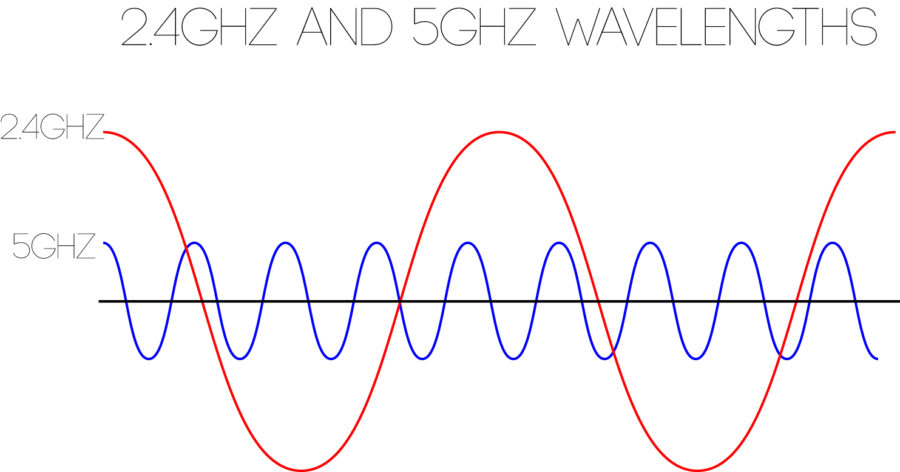
Another difference is the amount of data each band can carry. 5G waves have more energy and are closer together which enables them to carry more bandwidth or speed over the air. While they can carry more information they do not have as far of a range and they are hampered by distance and physical obstacles in its path to the device. 5G has a range of typically 25 to 40 feet from the router based on our experience at CTC with the most common home and small office Wi-Fi routers. While 2.4G wireless has a typical range of 30-50 feet. This is all dependent on the amount of wireless interference and obstructions in the home. 2.4G wireless is able to go further than 5G can but it carries less information which means less speed to your devices. It is also more prone to interference than 5G wireless is because there is a lot of noise on that band.
Common household items that emit 2.4 Ghz wireless interference:
- Microwaves
- Wireless toys such as remote control cars
- Some car alarm remotes
- Other sources of WiFi such as neighbors and other routers close by
- Cordless phone
- Baby monitors
- Bluetooth devices
